
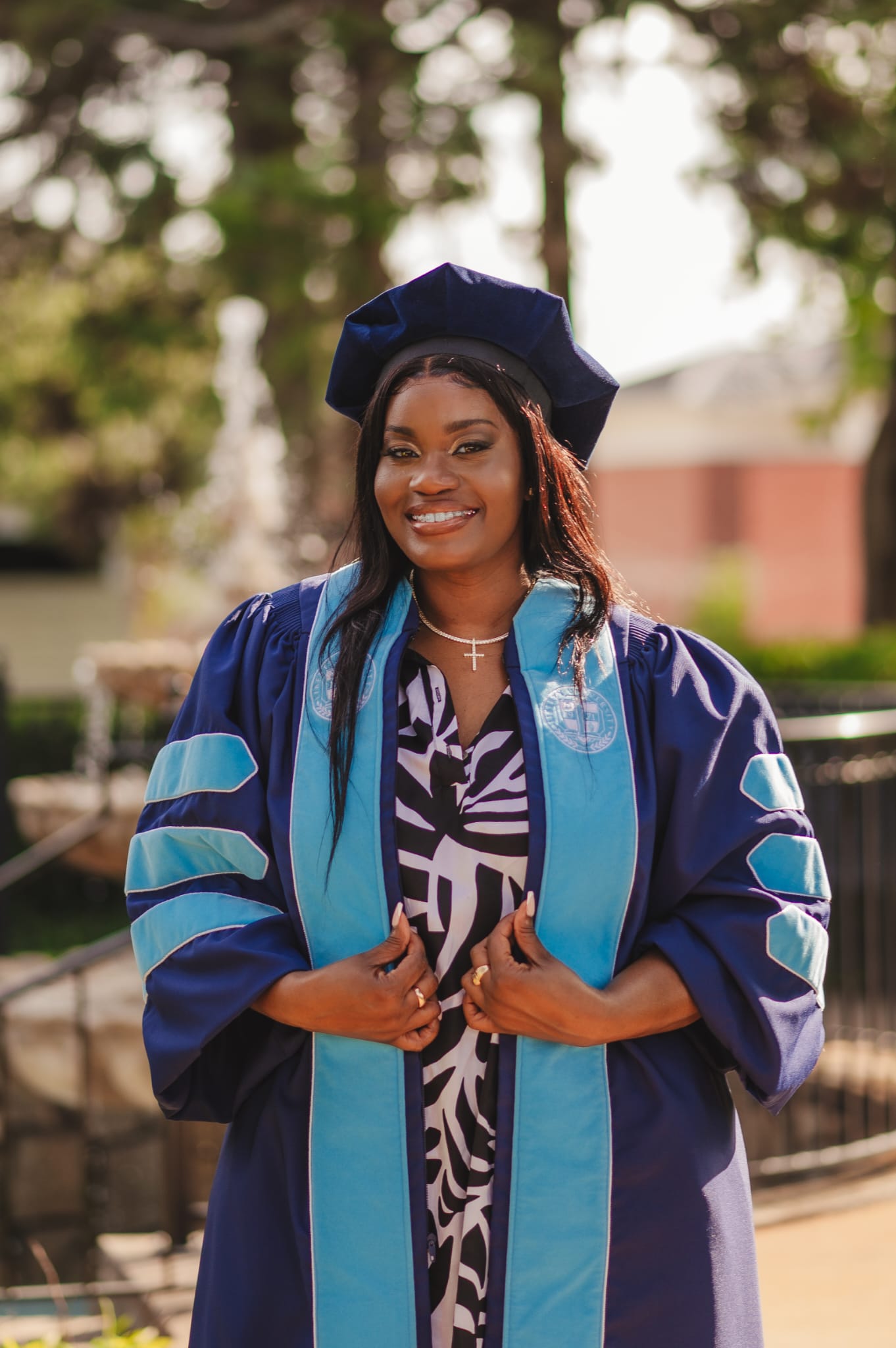
From a young age, Racquel Vernon seemed destined to follow in the footsteps of her grandmother, Rosemarie Vernon, a former president of the Jamaica Teacher’s Association. Despite the twists and turns along her journey, Racquel’s path to becoming an education stalwart was meticulously planned out by her grandmother the moment she expressed her desire to become a teacher.
Racquel recently celebrated a significant milestone in her career by earning her Doctor of Education (EdD) degree from Liberty University in Lynchburg, Virginia. “It’s actually an EdD, not a PhD,” she clarified with a smile. “The EdD focuses more on practical application within the classroom setting, which is why I chose it.”
Her grandmother’s influence was profound.
“If my grandmother had her way, I would have completed my degree a long time ago, before I turned 30,” Racquel reminisced. “She was an educator herself and always guided me towards getting an education. When I decided to go into teaching, she mapped out my entire academic journey—bachelor’s, master’s, and then the doctorate.”
However, life had its own plans. Racquel faced challenges along the way, including a delay in completing her master’s degree, which she finally finished in 2020, four years after her grandmother’s passing. “I wish she had seen me finish it,” Racquel said wistfully. “She was so invested in my education.”
Despite considering other career paths, Racquel ultimately decided to stick with education. “At this stage, I realised I should stick to what I know,” she explained. “Education is a great field, even though the financial rewards aren’t always there. I considered other professions, but starting over in a new field felt daunting.”
Racquel’s passion for education is evident in her choice of specialisation. “I chose curriculum and instruction with a minor in instructional technology because I want to be part of what students learn and how they learn it,” she said. “I want to be involved in the planning process and understand how policies are made.”
Her journey into educational technology was eye-opening. “When I moved here, I saw how integral technology was in students’ lives,” Racquel shared. “Back in Jamaica, we had limited access to computers, but here, every student had their own laptop. I had to adapt quickly to using smart boards and various educational apps.”

Racquel’s initial struggles with technology turned into a learning experience. “I remember days when my third-grade students had to teach me how to use the smart board,” she laughed. “They had been using it since kindergarten, and I was learning from them. Technology made my lessons more engaging and streamlined tasks like grading and attendance.”
Seeing the impact of technology on education, Racquel became a strong advocate for its integration. “Technology isn’t stagnant; it’s dynamic and constantly evolving,” she noted. “We need to learn how to use it effectively to enhance teaching and learning.”
In Jamaica, Racquel recalled how teachers had to create their own assessments, writing test items and story problems from scratch. “Every other week, I was writing math tests, creating story problems, and crafting language arts sentences,” she said. “Here, everything is generated online. I just input the standard or objective, and it generates all the questions I need.”
While technology has made many aspects of teaching easier, Racquel emphasised the importance of using it responsibly. “If we’re not careful, teachers can become lazy, relying too much on pre-generated content,” she warned. “It’s crucial to stay creative and engaged with the material.”
Rosemarie Vernon’s Influence
Racquel’s grandmother, Rosemarie Vernon, was a major inspiration in her life. “She came into teaching very young and always said that if she had gone to high school for even one day, people wouldn’t recognise her because she would be so big,” Racquel shared. “She only had a primary school education and started from the bottom up.”
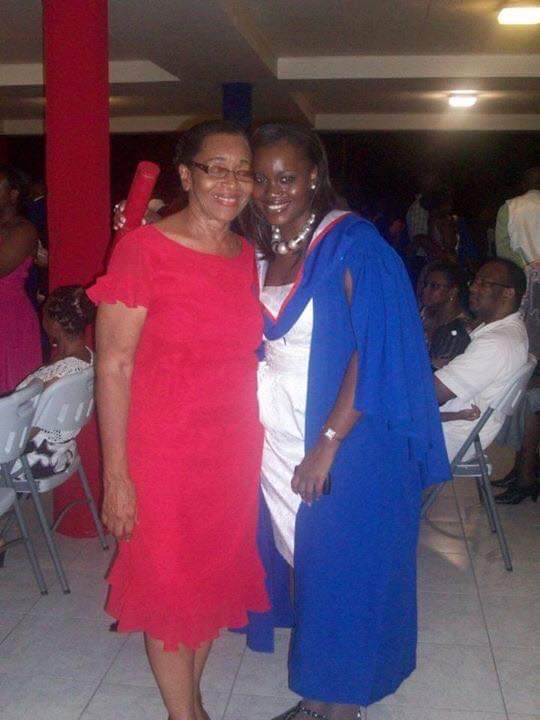
Rosemarie’s determination was evident in her journey. “She went to the principal of a teacher’s college and asked to enroll, despite not having the qualifications,” Racquel recounted. “He gave her some assignments to read, and that’s how she started. She was so determined to make something of herself.”
Rosemarie Vernon made history as the first classroom teacher to become president of the Jamaica Teacher’s Association. “I was like her handbag, the first grandchild,” Racquel said. “She embraced me so much, despite stressful and daunting onfolding situations.”
Growing up, Racquel was always at school, often arriving before classes started and staying long after they ended. “I grew up in that environment,” she said. “When she became principal, she continued to work in education, teaching at the Jamaica Theological Seminary and being involved in various organisations like the Red Cross and the broadcasting union.”
Rosemarie instilled in Racquel the importance of education as a way out of poverty.
“We didn’t come from money, and she knew education was our way out,” Racquel explained. “She always said she might not leave me a lot of money, but she would leave me skills and lessons that I still live by today.”
Racquel credits her success and integrity to her grandmother’s teachings. “She always made sure I knew what was happening in the world,” Racquel recalled. “We would watch the news together, and she would quiz me on current affairs. Back then, I didn’t understand why, but now I know it makes me more marketable and knowledgeable.”
Despite the strict structure at her grandmother’s house, Racquel appreciated it. “While my siblings enjoyed the flexibility at my mother’s house, I liked the structure at my grandmother’s,” she said. “She limited our screen time, made us do math and reading, and kept our minds active.”
Racquel’s younger sister is also following in their grandmother’s footsteps, working as a kindergarten teacher in Canada. “She helped me with my charts and grading papers growing up,” Racquel said. “Now, she’s an up-and-coming educator herself.”
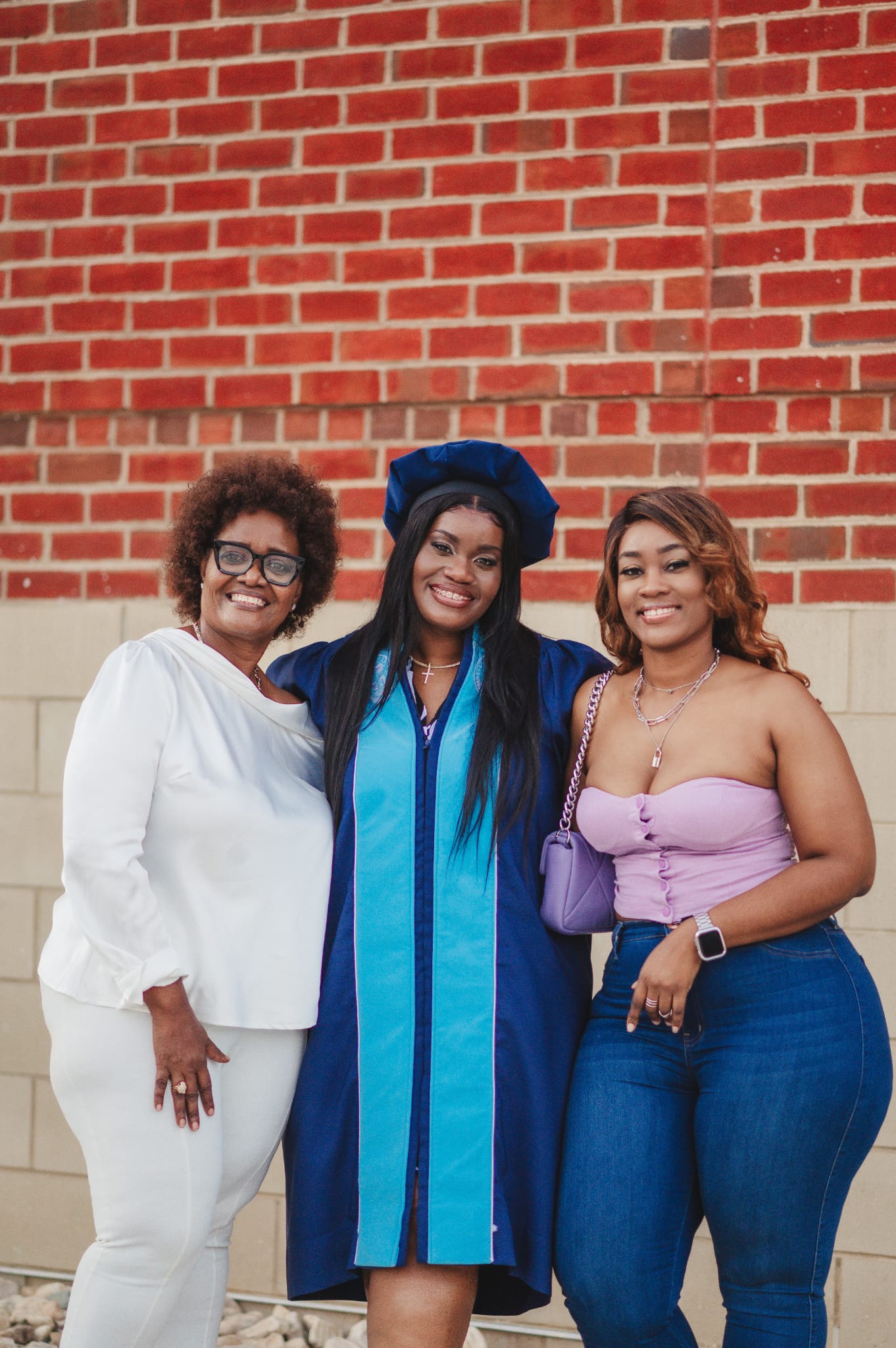
Racquel grew up surrounded by educators, not just within her immediate family but also among her grandmother’s colleagues, who felt like extended family. “I have a lot of teacher aunties,” she said. “It was like a family. We would visit each other’s houses, and they were more than just coworkers.”
Drive and Tenacity
Reflecting on her academic journey, Racquel compared her experiences in Jamaica and abroad. “The MA in Communication for Social and Behaviour Change at UWI gave me a strong foundation in research,” she explained. “It was more rigid and challenging to get an A in Jamaica, but it prepared me well for the doctoral program.”
Racquel’s experience and maturity helped her navigate the doctoral program more effectively.
“I learned to be intentional with my efforts,” she said. “Instead of being overwhelmed by the big picture, I focused on completing one chapter at a time. This approach made the process more manageable.”
She also doubled up on her coursework to complete it within a year and a half, knowing her time abroad was limited. “I had red eyes from all the studying, but I was determined to finish before I had to return home,” she said.
Managing work-life balance was one of Racquel’s biggest challenges during her pursuit of the EdD. “I was a teacher during the day and a student at night,” she explained. “Staying up late, drinking coffee to stay awake, and then getting up at 5 a.m. to go to work was tough. But I didn’t want my students to suffer because of my schedule.”
Despite the challenges, Racquel excelled in her role as a teacher, receiving back-to-back awards for being among the top 25 per cent of teachers in her county and state. “I think I should send you the picture of the letter they sent me,” she said proudly.
Racquel believes that technology plays a crucial role in facilitating social and behavioural change within educational systems. “Computer literacy needs to be taught, and students need to use technology responsibly,” she emphasised. “When used correctly, technology can significantly enhance education and promote positive behavior change.”
Balancing work, studies, and personal life was easier for Racquel now compared to ten years ago. “Experience taught me what’s important and what isn’t,” she said. “I didn’t entertain certain distractions and focused on my goals. Living alone also made it easier to manage my time.”
Support
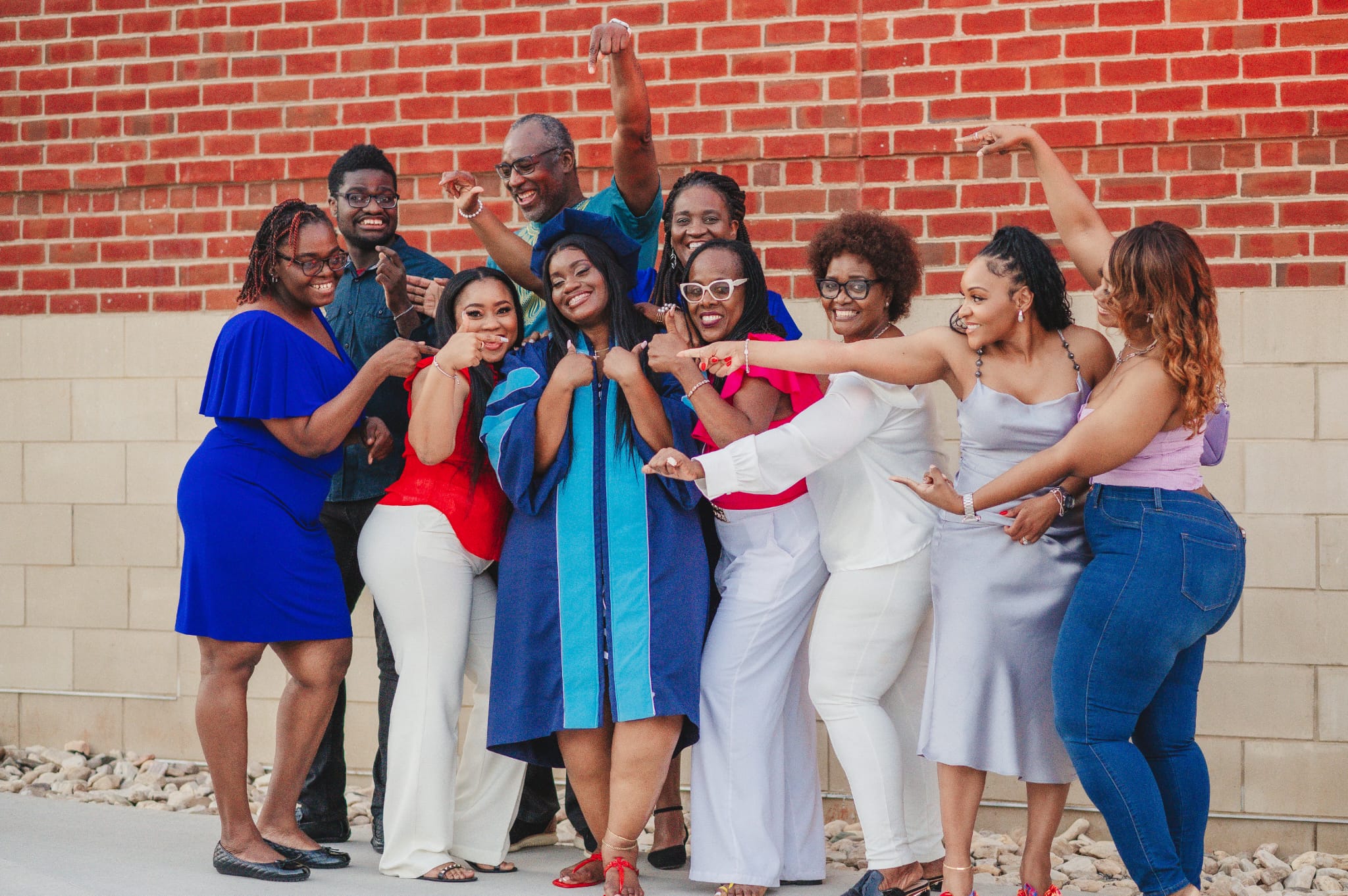
Back Row: Cousin Tajaun, Uncle Steve, Aunty Joy(photo credit: Erika Fletcher, Joy Shots Photography)
Racquel’s journey was made easier by having a supportive network. “I grew up with a lot of teachers in my family,” she said. “My friend – who was more like a cousin – and I went to the same primary school, where my grandmother was the principal. We went to UWI together, applied for jobs at the same school, and even got an apartment together. It saved us a lot and made the experience more manageable.”
Racquel’s ability to manage her time effectively was crucial. “I’m a procrastinator,” she admitted. “But I learned to plan my time and accept the consequences of my choices. If I wasted time during the day, I knew I’d have to stay up late to finish my work.”
Her maturity and experience helped her balance her personal life with her academic and professional responsibilities. “I didn’t have family stress or children to worry about, which made it easier,” she said. “I still made time for friends and family, traveled, and enjoyed life, but I knew when to focus on my studies.”
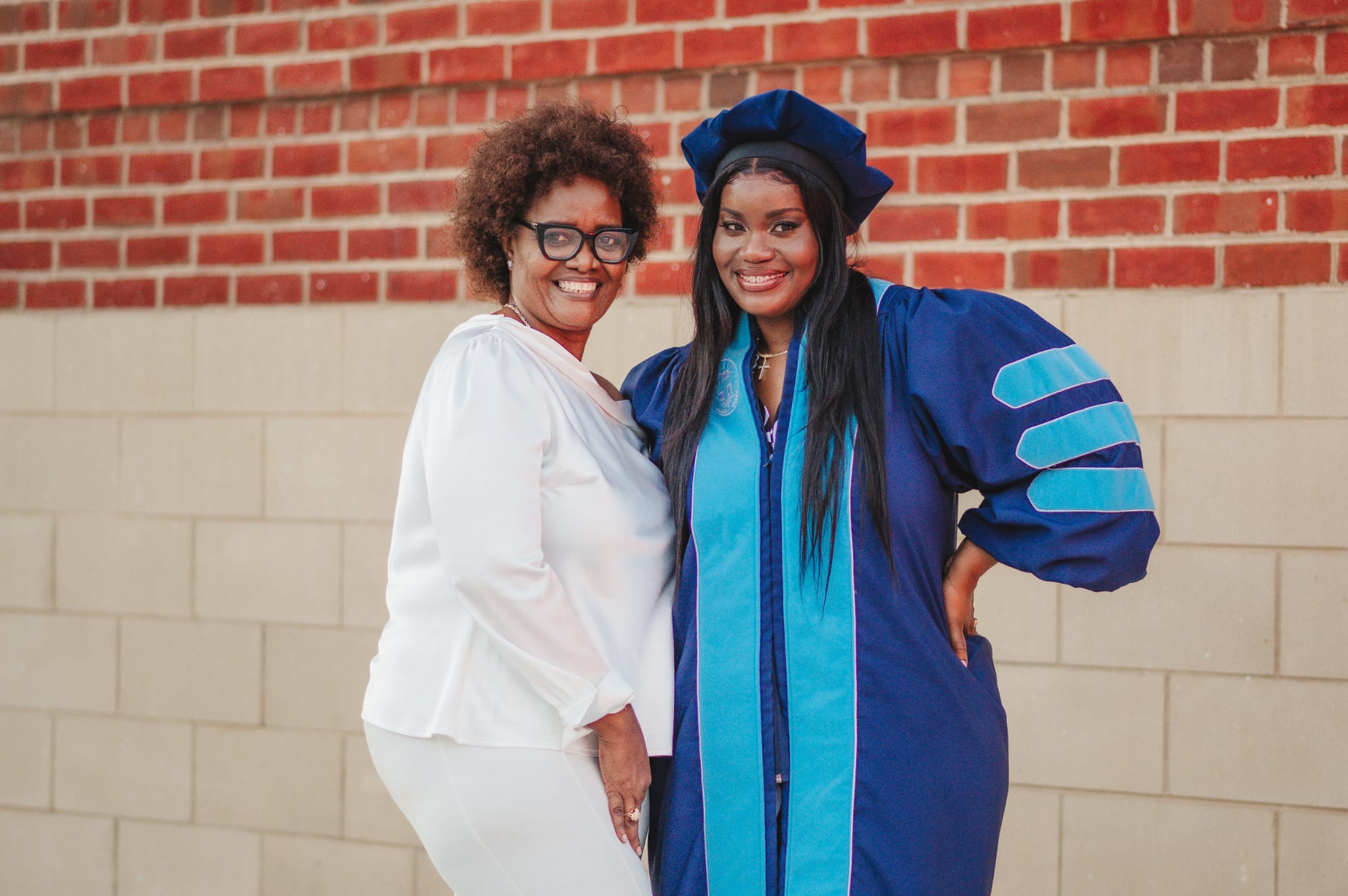
Racquel’s mother played a significant role in helping her manage her time effectively. “My mother knew I had a deadline and turned off the TV, saying I couldn’t live like this,” Racquel recalled. “She went out shopping without me, and by the time she returned, I had finished my assignment. I work well under pressure, and that’s just how my creative juices flow.”
‘ResearchEdD’
Racquel’s research for her EdD focused on addressing teacher shortages. “I saw the impact of not having enough qualified teachers, especially in rural areas,” she explained. “My research aimed to find sustainable solutions to attract and retain teachers in these underserved regions.”
Looking ahead, Racquel has ambitious plans for her future in education. “I’m still learning because new opportunities and jobs come up every day,” she said. “But I know I want to do something in consultancy, advising schools and administrators on best practices. I also want to be involved in policy-making within the Ministry of Education and teach college classes.”
Racquel is also interested in personal development outside of education. “I have aspirations of learning other things for personal gain, like taking courses in law and finance,” she shared. “I love watching court cases and learning about investments. It’s important to be well-rounded and knowledgeable in various fields.”
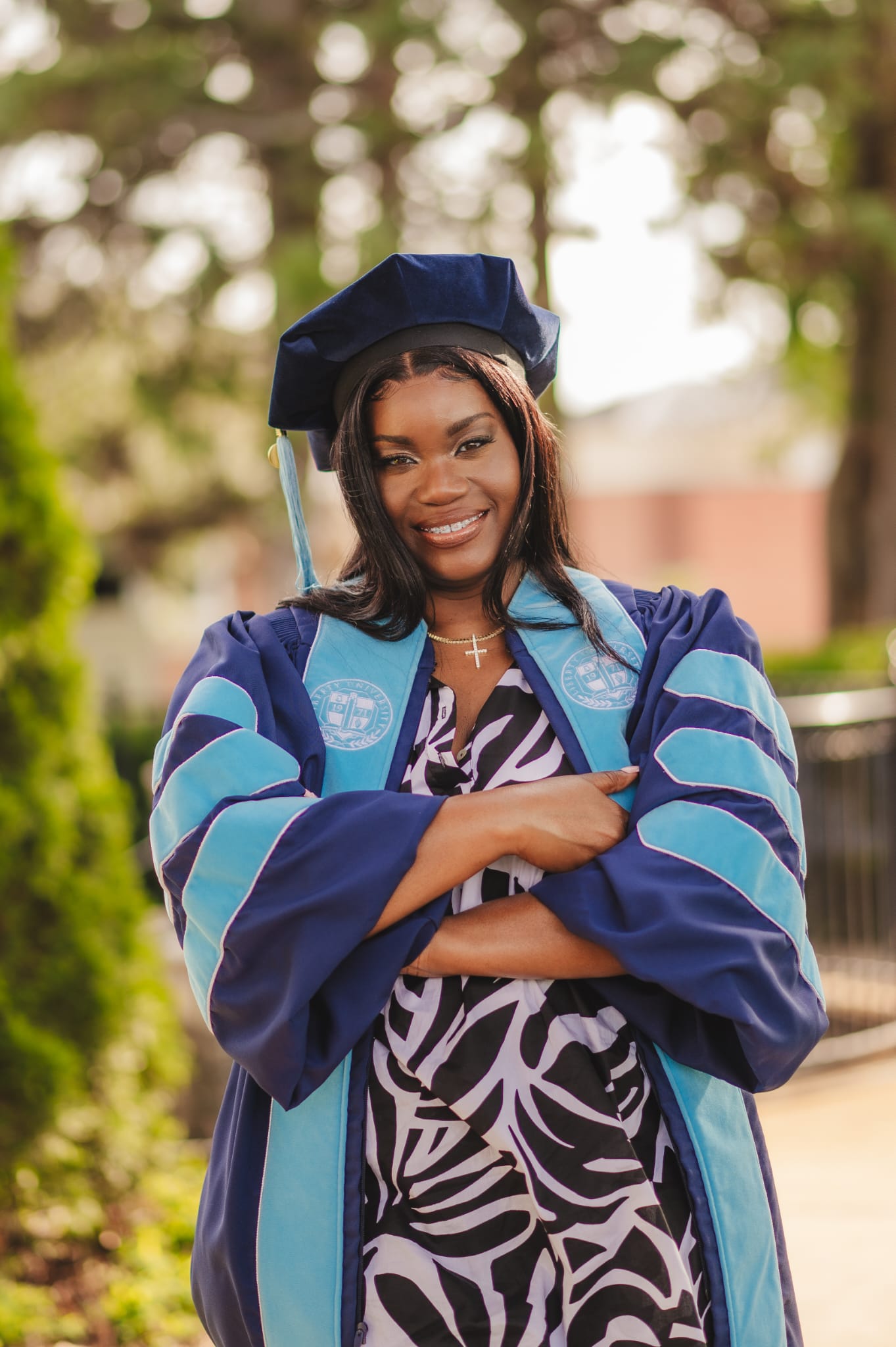
For educators looking to integrate more technology into their teaching practices, Racquel has some advice. “Learn it, do the research, and don’t be afraid to ask for help,” she emphasised.
“Technology can make your practice more exciting and resonate more with students. Surround yourself with people who know more than you and be open to learning from them.”
Racquel’s journey is a testament to the power of perseverance, the importance of education, and the impact of a supportive network. Her story is an inspiration to educators and students alike, showing that with determination and the right support, anything is possible.
Signed,
The Suburban Girl JA
 The Suburban Girl JA®